The Cyclocross Workout Of The Day for Wednesday, 9.11.13. “Kerfuffle”

•September 10, 2013 • 2 Comments

Howdy folks,

well, heck.

If you’ve been following any of the social media outlets the last couple of days, you’ve probably seen some of the discussion that’s been going on regarding dismounts.

Mostly read like an undergrad theology class to me.

I’ve thrown my 2 cents out there before, so thought I would re-post, just to get my own views on the religion out there.

So, here you go…


The Hokey-Pokey

(or, left foot in, left foot out, that is what it’s all about.)

Fair warning: this is about as dweebish as it gets. It’s also (largely) a re-write of a post from previous seasons. If you find yourself actually wanting to read more on the subject, and similar subjects, enter “Wednesday” into the search box on the lower right side of this page. If you wade through the posts that come up, you’ll find a pretty high volume of skills posts. Lots of words, some pretty pictures.

Mostly words.

ANYways, onwards!

————————————————-

First, lets look at the Pedal/Shoe interface –

All of the clipless pedals commonly used for cyclocross operate on the same basic principles.

A cleat –

Is held in place in a pedal…

…by a hook at the front of the pedal, and a gate at the rear. *

The gate is spring-loaded, in an orientation that provides for extremely high resistance to force in the vertical plane, and extremely low resistance in the horizontal.

The cleat/pedal interface is designed so that lateral or medial rotation of the foot overcomes the spring tension holding the gate portion of the pedal in place, releasing the cleat and allowing for vertical disengagement.

The factors that limit the proper functioning of the pedal in release mode are these –

– Force necessary to overcome spring tension of gate

Can the lateral/medial motion of the foot produce enough force to overcome the spring tension of the gate?

– Range Of Motion (ROM)

Can the foot produce a wide enough range of lateral/medial motion to overcome the spring tension of the gate?

– Resistance multipliers

The resistance of the pedal gate to lateral/medial motion is designed to be low, but several factors can cause substantial increases in the actual force necessary to release from the pedal. For EG –

– Contamination by foreign media

Mud, grit, crap of all sorts in pedals/shoes can jam spring mechanism

– Out of plane cleat motion in act of release

If the foot/cleat is pronated/supinated in the attempt to release from the pedal, it introduces a vertical force component to the cleat/pedal interface, causing potentially significant increases in overall force necessary to trigger disengagement.

OK?

Now, the body –

The rider triggers release from the pedal by rotating the foot medially or laterally –

(Generally speaking, we always try to release using  medial rotation. There are lots of sharp spinning parts providing a disincentive for release motions that lean in towards the bike.)

Medial rotation of the foot is a result of medial/internal rotation of the hip

knee,

…some combination of the two, or rotation of the entire body.

The range of these rotational joint moments is limited. Here are some observed norms, if you’re interested –

http://ovrt.nist.gov/projects/vrml/h-anim/jointInfo.html

OK?

Great!

What the hell does this have to do with cyclocross?

Bear with me.

When we dismount the bike,  We’re trying to get off  (the bike)

– Quickly

– smoothly

– efficiently

– without hitting the deck

Knowing how the mechanics of the pedal/shoe interface and the related body parts function, we can think logically about how best to do this.

Here’s how I described a super-basic “Cowboy” dismount in a previous post –

1. Unclip right foot.
2. swing right foot over saddle, behind left leg.
3. Left foot stays clipped in. Right side of leg/ass braces against saddle.
4. r hand leaves bar, braces on top tube.
5. Coast in this position.
6. left foot unclips.
7. DROP to ground. Do not step down, right foot is totally passive. Simply drop to ground as you unclip left foot.
Here’s why the dismount breaks down this way, with reference to everything above…
1. Unclip right foot.
Gotta start somewhere, right?
2. swing right foot over saddle, behind left leg.
We’re doing this “cowboy” style. More on the “step through” style later…
3(a). Left foot stays clipped in.
…more on this later.
3(b). Right side of leg/ass braces against saddle.
Bracing the right side of the leg against the top tube stabilizes the body in a position that will allow for sufficient ROM to disengage from the pedal, and provides for an additional point of contact with the bike, increasing control of the bike during the dismount.
4. r hand leaves bar, braces on top tube.
bracing the hand on the top tube reinforces vertical stability of the body, helping to control the tendency of the foot to supinate
during medial rotation. Hand on top tube also helps to control bike, facilitates shouldering/portaging after dismount.
5. Coast in this position.
We use this coasting phase to sight the dismount and to prepare for…
6. left foot unclips.
The body is held stable, in alignment, and within the ROM necessary to release the cleat from the pedal. There should be no difficulty with release unless resistance multipliers are present…
7. DROP to ground. Do not step down, right foot is totally passive. Simply drop to ground as you unclip left foot.
The key is dropping to the ground after cleat disengagement.
By suspending the body in the correct position using the hands and hip (per 1-4 above,) we facilitate the conditions necessary for safe disengagement.
Attempting to step towards the ground, or dismount motions of the body disturbing the established equilibrium can and will result in an increased likelihood of a failure to disengage, and subsequent danger of crash/collision.
————————————————–
Whatever controversy there is regarding the method of dismount I describe here appears largely to append to my “don’t unclip the left foot first” recommendation.
Please allow me to emphasize that I do advocate releasing the foot prior to making any sort of “exiting the bike” motion. I do not, however, teach the method taught by many, espoused by nearly all of the East-Coast luminaries, and described (excellently) by Adam Myerson in his blog.
Here’s what Adam wrote in the comments section of an earlier post on the topic –

…I advocate clipping out of the left first when you have time to do so, and don’t need to be on the gas all the way to the dismount point. It’s much easier to step off a bike you’re not still attached to.

I advocate staying clipped in on the left when you have to pedal all the way up to the dismount point, and when you’re not stepping through.

I advocate stepping through ONLY when clipped out of the left already, and when you have ample speed and coasting time to take the extra time needed to step through.

Option 1 works every time, in every condition, and I consider it the default.

Respectfully.

I think -at the most basic level- we agree where it really counts.

Unclip before you begin any motion that leads to or constitutes “stepping off” of the bike.

I can understand why the “Unclip before stepping over” approach works, and is popular with many riders. It’s a good way to get off the bike.

I don’t use it myself, and therefore I don’t teach it.

Why don’t I use it?

As explained well in the Cycle-Sport Blog post, this dismount method -while very effective – is not universally applicable, and is not optimal under conditions such as “…uphill dismounts, deep mud, last minute dismounts….” (I would also add sand to the list.)

Believe it or not (and I know I’m straining credulity writing this after forcing you to wade through this ridiculous post,) I’m all about simplicity.

If I can teach one technique that works all the time, or two techniques, one of which only works most of the time,  I’m going with the one that works all the time.

Honestly, though?

This might just be an East-Coast/West Coast thing.

West Coooooaaaaaassst….

The main reason I don’t use the “unclip first” method is because I learned early on that on the rutty, crappy, chuckhole infested minefield disaster courses of Seattle, circa a couple of decades ago.

On that stuff, if you tried to ride into a barrier section hanging off the side of the bike balanced on an unclipped pedal, you were pretty likely to get bounced off the pedal, and flat onto your ass.

It just wasn’t a good default position for the courses out here, and really… it still probably isn’t.

Above all else, figure out what works best for the the courses *you* ride on, practice it, wire it, and go fast.

Nothing wrong with either approach, just…

—————————————————————


*                    Yeah, yeah, I know… “what about crank bros, Speedplay, Time, etc.”?
The details are slightly different, but in all the commonly used “mountain bike” pedals, the function of the pedal still follows the same basic formula.
**                  What about the “step through is dangerous and should never even be taught” thing that people have been venting on Twatter & Farcebonk?
My 2c from Twitter: “raging anti-step through kerfuffle further proof lots of folks take up cycling ’cause they can’t do ball sports .#proprioceptiveidiots #justsayin“The

G’night,
M

The Cyclocross Workout Of The Day for Tuesday, 9.10.13. “Tuesday Get-up”

•September 10, 2013 • Leave a Comment

Howdy folks,

Late again!

Sorry… got swamped with work last night, and suddenly it was 2 in the morning, and I didn’t want to fall asleep with my face on the keyboard again…

images (1)

Blech. No fun.

…and drool isn’t good for your laptop. Not that I would know anything about that from personal experience…

…anyways…

If you’re a Seattle local, and you raced Sunday, and you’re planning on doing the StarCrossed CX this Saturday, today might be a good idea to take a day off the bike.

That was a hard race this past weekend, and from what I’ve been seeing, not too many folks are fully recovered today.

So think about it, ok?

Otherwise, it’s Tuesday.

You know what that means, right?

It’s…

2×20 Tuesday!

Here’s how this goes…

– Warm up.

– Go as hard as you can for 20 minutes.

– Recover for 2 minutes.

– Go again for another 20 minutes.

That’s the basic version. This is the get-up version, though, so…

Start the first interval out of the saddle, and stand for the first 30 seconds.

After those 30 seconds are up, sit down. Keep the effort going, and consistent. Don’t surge, don’t go harder when you get out of the saddle.

Stay seated for the next 1:30, then stand for 30 seconds.

Repeat to the end of the interval, and follow this format for the successive interval.

The idea here is to go as hard as you can for the duration of both intervals without being forced to go easier at the end of the second interval.  If you run out of gas before you finish the second interval, you went too hard. If your vision isn’t blurry at the end of the second interval, you went too easy.

If you’re doing this with a powermeter, you want your wattage output to be as close to constant as possible. We’re talking 10 watt variance at the most. Keep it steady.

These take practice to do well, and the better you get, the harder they get. This is another workout that works great on the trainer, and that’s how I do ‘em, which is a good thing… because I always wind up flat on my back on the floor trying not to puke after the 2nd interval.

I’m really not kidding about the seeing spots thing. If you can learn to push through your limits when you do these, you will get better and well… you will get better.

Tips:

– I do these on the trainer, with a stopwatch on the bars and an Ipod blaring in my ears. Start the stopwatch at the beginning of the interval, and the format is really easy to follow; you stand up for :30 at the 2:oo, 4:00, 6:00, etc. mark(s). Get it? It’s easy!

– A power meter will help you to keep the level of intensity constant. You want the power output to be as steady as possible with these. If you don’t have a PM, do these on the trainer,  choose a gear ratio and a cadence, and stick to that for the duration of the exercise – instant home made ergometer.

– No reason you can’t do these normal-style. Honestly, for many/most of you, that might be a better bet.

Why did I tell you to do the variation today? Some folks have been struggling to get through the longer efforts this season.

It can really help, mentally, to have that out of the saddle effort thrown in to the longer/larger workout. It makes it feel just a bit like you’re doing a series of 2 minute intervals rather than 20 minute ones.

You’re not, though. Try to avoid the temptation to up the output level when you get out of the saddle, OK? That’s an entirely different workout.

Maybe next week…

 ;)

Enjoy!

M

The #Cyclocross Workout Of The Day for Monday, 9.9.13. “Beat”

•September 9, 2013 • Leave a Comment

Howdy folks,

Feeling beat?


…after the weekend’s racing and/or the riding off of your ass?


I sure am.

Only one cure. Go for a…

Recovery Spin –

– Get on your bike. Roll out into the street, and just spin around for an hour.

– Really small gear, no hard efforts – heck, no medium effort.

– Spin. You’re looking to move your legs around in circles, almost like there is no chain on the bike.

– The idea is to get your body moving, flush the systems out, and speed your recovery.

– Just get out on the road and spin aimlessly. At a certain point, your legs suddenly feel better.

– As soon as that happens, turn around, go home, eat, stretch, and put your legs up.

yoga-legs-up-wall

Relax.

Have fun,

M


The #Cyclocross Workout Of The Day for Sunday, 8.8.13. “BullRace”

•September 7, 2013 • Leave a Comment

Howdy folks,

It’s the first day of the season in much of the Cyclocross world, so if you’re racing today, the workout is pretty self explanatory, right?

Go Race.

If you haven’t read it yet, you may want to check out the post on warming up I wrote a while back. People seem to like the suggested routines. Give ‘em a try, and let me know if they work for you…

If you aren’t racing tomorrow… well, heck… why not?

Just kidding.

If you aren’t racing, you should get some hard riding in today.

pro-bull-riding-crash

Do something as much like a race as you can.

Maybe try out…

The Doppelganger – 

– Warm up well. If you have time, warm up as you would for a race. It’s good practice, if nothing else.

– After you have warmed up, do five full-gas starts. As always, focus on the second effort in your start, working on getting back on the gas right after you max-out on your initial effort and begin to sit down.

– 20 minutes at your 2×20 pace.

– 2 minute rest.

– 10 minutes of Over/Under intervals

The baseline for this interval is the level of effort/output you just did in the 20 minute effort.

However hard you went in that interval, you are going to try and hold that for the 10 minutes.

Easy, right?

Here’s the rub.

You’re going to sprint for 10 seconds every minute of the interval.

How hard are you going to sprint?

Hard, but not so hard that after you sprint, you can’t sit back down and keep churning away at your 2×20 level.

This takes some practice to figure out.

Don’t get all freaked out if you blow it and can’t hold the effort until the end. You tried, right?

Having said that, don’t wuss out and quit. This is some difficult s***, man. You want to get faster, right?

OK.

Here’s how this works.

Use a stopwatch. Put it on your bars.

Start the stopwatch.

Start the interval with a sprint, out of the saddle pretty hard, but not full gas.

Sprint for 10 seconds.

Back in saddle, drop into your 2×20 zone. Hold this until the minute mark, then –

Sprint again. 10 seconds.

Back in saddle, 2×20 level until 2 minute mark…

Repeat.

Repeat…

Repeat, until you have hit the 10 minute mark.

– 5 minute recovery

– 10 minutes at 2×20 level

– 2 minute recovery

– 10 minute Over/Under Intervals

– SPRINT at the very end of the last interval. 30 seconds, all out.

Really all out, like “I’m sprinting for the Maillot Arc en ciel” all out. You should be at least half-blind at the end of the sprint.

Heck, you should be so gassed when you start the sprint that just upping the tempo a little bit puts you in a box.

You asked for a race simulation, right?

Ouch…

Notes –

Yes, this is f-ing hard. Shoulda raced.

You can always just sub in a 2×20 (or better yet a 3×20…) when you can’t race. That’s a hard damn workout if you do it right, but certainly nothing like the nightmare I just handed to you…

Have fun!

M

The #Cyclocross Workout Of The Day for Saturday, 9.6.13. “Cannily”

•September 6, 2013 • 1 Comment

Howdy folks,

Daaaaang.

Saturday.

Race season starts tomorrow, like fer reals.

If you’ve been following along, and took yesterday off, you should be rested and rarin’ to go.

You just need to prime the pumps before tomorrow’s race.

Today you need to do some…

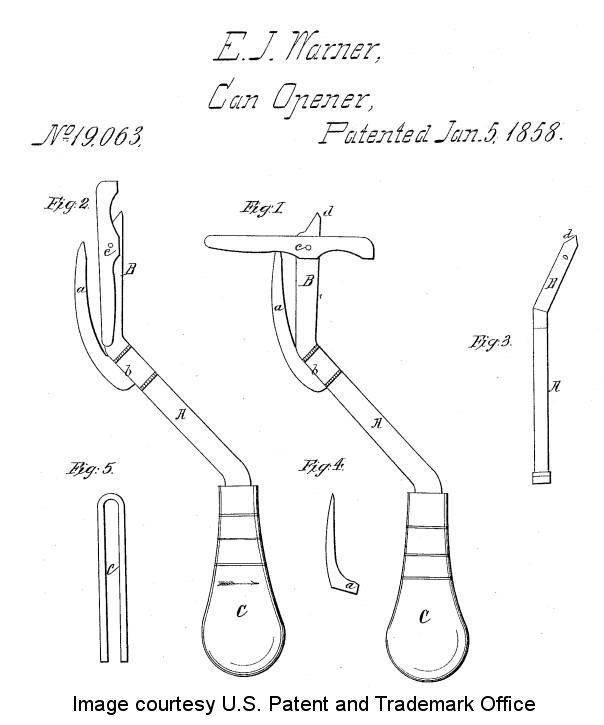
Can Openers – 

can-opener_warner


Warm up for 1/2 hour or so.

Follow with several short attacking efforts, IE 30 seconds at 80% of your max, or pretty damn hard.

Back off and spin for 5 minutes.

Follow with 10-15 minute effort at AT level, or CP30, or “I could talk to you if I had to, but I don’t want to” level.

Spin for several minutes.

Follow with 5-6 full gas start efforts on a straight section of paved road, level or slightly uphill.

You want to begin these from a dead stop, with one foot unclipped.

Do not stop until you get at least 3 perfect starts in a row, and I mean perfect; this is the cross equivalent of practicing free throws.

We all know how important starts are in the race, so make ’em count.

I don’t quit until I nail 5 in a row, but set your own threshold.

Got em’ dialed? Ripped ’em?

Cool.

Spin out the legs, then go home and rest.

You’re ready to race tomorrow.

Have fun!

M

The Cyclocross Workout Of The Day for Friday, 9.6.13. “Nada”

•September 5, 2013 • Leave a Comment

Howdy folks,

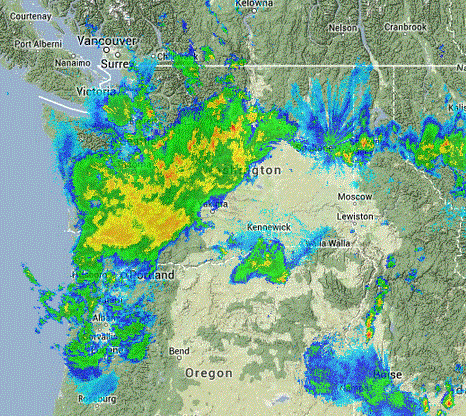
Geezuz… it’s dumping rain here in Seattle…

10PM radar


Lots of thunder & lightning, too… but no golf-ball hail. Sounds like that’s all reserved to be dropped on the heads of the folks at Geezer Road Nats down in Oregon.

Must be Cross season, like for reals.

Pretty cool.

So, since it’s raining, that probably means that there’s some racin’ going on this weekend.

Yup.

At least up in my neck of the woods there is, with one of the two big local series getting underway on Sunday.

With that in mind, we should probably talk about today’s workout, right?

Cool.

It’s pretty easy.

It’s…

Nada.

Yup.

Today, take the day off.

We want to see you hit the race on Sunday fresh and rarin’ to go.

So, get some rest today.

We’ll hit the openers pretty hard tomorrow to make sure you’re firing on all cylinders come race o’clock, but we don’t want to see you flat & fatigued the first time out.

Make sense?

Nice.

Enjoy the day off,

M


The #Cyclocross Workout Of The Day for Thursday, 9.5.13. “Bacon Socks”

•September 5, 2013 • Leave a Comment

Howdy folks,

Thursday is here, and as you can probably tell if you ‘ve been following along with the workouts on here for a while, this is the day that we mix things up a bit.

Sometimes we do some speed work today, sometimes we do a little bit of climbing, an every once in a while, we do a wee bit of running.

Like today.

Today, we’re heading on out to the local stairs and doing some..


Knee Highs – 

bacon socks


(If you haven’t been playing along with us for a while, or if you haven’t read my take on running for Cyclocross, maybe check this out before reading any further, OK?)

 – get on your bike and warm up for 15 minutes or so.

(we’re going to warm up for any running efforts we do, all season, with some time on the bike. )

– Mosey on over to your stairs/knoll/whatever, and get set. Stretch, have a sip of water, turn up the volume on your Ipod.

– Jog up the stairs. Walk down.

– Repeat x3

– Sprint! up stairs, fast, using whatever stride is most comfortable. Walk down.

– Repeat x3

Rest for 1 minute, walking slowly up and down stairs.

– Sprint up stairs, this time using quick, tiny strides, 1 stairstep at a time. Jog down.

– Repeat x3

Rest again, same as before.

– Sprint up stairs, this time using long strides, several stairsteps at a time. Walk down.

– Repeat x 3

Rest again.

– Sprint up stairs, combining the previous two exercises; long step, followed by 2 short steps. Do 1x.

Walk down.

– Run up stairs, high knees –

Repeat x3

Rest again, 2-5 minutes.

Sprint up stairs, free form, just go as fast as you can. Go until spent.

– Repeat entire damn thing if you’re a freaking animal.

Get back on bike, spin out your legs, go home.

Notes –

– If you can, go really damn hard. If you do this right, it’s a brutal workout.

– Don’t go that hard if it’s your first (or nearly first) time running this season. In fact, don’t do this workout at all. Do this instead.

The #Cyclocross Workout Of The Day for Wednesday, 9.4.13. “CX310”

•September 4, 2013 • Leave a Comment

Howdy folks,

Well, it’s Wednesday. Normally this is the day that we do some Cyclocross Skills work, and for a good chunk of you, that probably wouldn’t be a bad idea for a workout today.

If you kinda’ feel like you need to be doing that sorta thing today, well… right on.

Head over here and pick a workout.

Lots of choices…

Are you still feeling gassed from the work you did over the long weekend?

tear-gassed


Today might be a good time to take a day off.

Yup, you heard me.

Take today completely off.

No riding, no running, just act like a normal person.

Weird, huh?

Too weird?
1239659-weird-al-yankovic-portrait-617-409


OK.

Today, have a go at the…

CX310 – 

You’re going to need a flat(ish) low-traffic area to do these, so think of a good venue. The place where you do your 2×20’s is probably a good choice.

Warm up well.

Start your first interval with a foot on the ground, Cyclocross start effort style.

Hard effort off the line, about 80% of the effort you would put into an actual race start.

As soon as you get up to speed, settle in at a hard, 2×20 level pace.

Roll at this effort level for 10 minutes.

You’re going to do this three times, with 5 minutes recovery between intervals.

Kinda.

There’s a twist.

You’re going to do one additional 10 second start effort every minute during the “recovery” phase.

So, things look like this:

Warmup

Start effort

10 minute interval

1 minute recovery

10 second start interval

1 minute recovery

10 second start interval

1 minute recovery

10 second start interval

1 minute recovery

10 second start interval

1 minute recovery

Start effort

10 minute interval

Etc.

Dazed and confused?

Don’t sweat it.

It’ll make much more sense out on the bike (I hope!)


Have fun!

M


The #Cyclocross Workout Of The Day for Tuesday, 9.3.13. “Asthma-induced”

•September 3, 2013 • Leave a Comment

Howdy folks,

Well, yikes.

This is about as late as I’ll ever get a post up, but I’ve got a pretty damn good excuse.

I had a massive asthma attack in the season opening cross race yesterday; was just about my worst day (20 minutes?) on a bike, ever.

Started to lose my breath when I was in 1st wheel, and things got progressively worse to the point that I just pulled over and coughed.

For (literally) 15 minutes.

Then threw up.

dog_vomit_toilet

Feel like I tried to gargle a Buick, and then it ran over me when I puked it back up.

Oddly enough, didn’t get much writing done when I got back home post-race.

Cross season can only improve from here, though…


Enough about me.

Workout time.

In the spirit of my crappy day, and given what I’ve been hearing about everyone’s long weekend, today we’re going for a…

Recovery Spin (hackhack,coughcough)

– Get on your bike. Roll out into the street, and just spin around for an hour.

Really small gear, no hard efforts – heck, no medium effort.

Spin.

You’re looking to move your legs around in circles, almost like there is no chain on the bike.

The idea is to get your body moving, flush the systems out, and speed your recovery.

When you do your recovery ride – if you have the time – just get out and spin aimlessly.

At a certain point, your legs suddenly feel better.

As soon as that happens, turn around, go home, eat, stretch, and put your legs up.

Relax.

Or at least try to.


Have fun!
M


The #Cyclocross Workout Of The Day for Monday, 9.2.13. “Warm It Up”

•September 1, 2013 • 2 Comments

Howdy folks,

Well, here it is. Time for the first race of the season!

As usual, the one single thing most people are asking me about this time of year is,  “What the heck should I do to warm up for my race?”

So, OK.

Message received.

Today we…

Warm It Up.

First of all, don’t overdo it.

I see way, way too many people spending a ridiculous amount of time on their trainers before the race, and frankly, I think a huge number of racers leave their best effort of the day back in the tent on the Gerbil Wheel before the race.


Don’t let this be you.

If you feel like you need to spend more than an hour warming up for your race, frankly you’re doing something wrong.

There’s been a fair bit written about warming up for cycling events, and if you spend any time at all reading through some of the stuff that’s out there, you will no doubt find that the only commonality is that most everyone disagrees.

Until you start reading some of the science, and some of the warm-up protocols suggested by those who have also read the science.

Here’s an interesting study…

with an interesting conclusion…

During endurance events of intermediate duration (4-5 min), performance is enhanced by warm-up irrespective of warm-up intensity

Note, also this little tidbit –

There were no differences in anaerobic power output during the trials, but aerobic power output during the first 1000 m was larger during both EWU (203 W) and HWU (208 W) versus NWU (163 W) trials.

Huh. Go figure.

I pretty much never warm up for road races, unless I Know the first few K are going to be pedal to the metal.

When people ask how I can get away with this (and they do!) I always respond with “that’s what the first lap/loop/5k is for…”

You can’t really get away with this in Cyclocross.

You need to hit that first K, hell that first hundred meters at 100%, with all guns blazing.

Warming up definitely improves your aerobic power output over the first K of a race.

End of story. You need to warm up for Cyclocross.

How much do you need to warm up?

Well, here’s where we get into interesting territory.

The study I linked to above basically showed no difference between the results of warm ups conducted at different levels of intensity and duration. The key was simply to warm up, get the legs turning over.

However you do it, warming up helps.

Nice.

Remember this the next time all hell breaks loose and you can barely get in any kind of a workout before your race. Even a little bit of a warm up helps.

OK, it’s just a study. Heck, it’s just one study.

Frankly, for Cyclocross, I think you need to warm up pretty hard, if for no other reason than that you don’t want the shock of that F-ing start effort to hit your body (and mind!) like a ton of bricks.

What you don’t need to do is warm up for a long time.

After a certain point, all a long warmup does is get you tired. And that ain’t good…

tired? 

OK, so what should your warm up look like?

Something like this…

Get on your bike.

Ride at a super easy level for 5 minutes. No pressure on pedals, recovery day light.

5 minutes more at just one notch higher.

2-3 minutes at right around your 20 minute output level.

then

2-3 minutes at one notch/gear easier

30 second race pace effort.

recover for 2 minutes easy…

30 second race pace effort.

recover for 2 minutes…

2 full-gas start efforts, 2 minutes between them.

Spin for 5 minutes.

Go race.

That’s just the actual warm up, though.

You need to figure in course preview time, getting all your stuff schlepped to where it needs to be, registration… the whole package.

Heck, in a perfect world, you would go ride for an hour in the morning several hours before your race!

The whole shebang is what’s important, and in a perfect world, your race day would look something like this:

Wake up.

Eat breakfast.

Ride for an hour.

Snack, take a nap.

Eat lunch (3 hours before race.)

Course preview

(while mechanic preps bikes, team staff handles everything else.)

Snack, electrolyte drink, change into race clothing.

Warm up (that thing we just talked about)

Win Race.

Post-race cool down.

Yeah, right.

Oh well, we try.

Get as close to that as you can, and remember – the science shows that any warm up is better than none!

I’ve managed to do really well in races where the only warm up I got was a 1 or 2 lap preview of the course, and I know I’m not alone!

If you are forced to choose, always pre-ride rather than warm up.

You get a less than perfect course preview, and a less than perfect warm up, but part of each is better than none of one!

Ok, after all that, are you ready for the reality-based warm up?

Quite frankly, this is what I wind up doing most of the time, and almost always if I wind up stuck on the turbo. It’s the –

R.S.W.O. – The Rock Stupid Warm-up and Opener –

First, get everything you need to do before the race done. Sign up, course preview, etc., etc. More questions you probably didn’t even have on the topic of race day routine answered here –

https://crosssports.wordpress.com/2010/09/05/the-workout-of-the-day-for-monday-9-5-10-laborious/

– Get on trainer. Spin for about 5 minutes.

– 2-3 minutes at your 20 minute output level

– Shift into big ring/largest cog combination.

– Ride 30 seconds in this gear, then shift up one cog.

– Ride 30 seconds in this gear, then shift up one cog.

– Repeat until you hit the hardest gear you’ve got, or can handle.

– Ride 30 seconds in that gear, and then shift all the way back down to the Big/big combo.

– Ride 30 seconds in that gear, then immediately shift to hardest gear you can handle.

– Full gas sprint, out of the saddle, for 30 seconds.

Back to big/big combo.

– Spin for two minutes.

Repeat The entire sequence (Usually minus the 2nd “20 minute level” effort.)


Phew.

’nuff said?


Have fun,

M


* If you don’t know what the heck I’m talking about when I say “20 minute level”, check this out…

** The Warm Up routines I describe here are actually pretty hard, and believe it or not, are likely to be too damn hard and too long for non-elite racers. You will need to experiment and figure out what works for you. Don’t be afraid to cut the warm up short, or go easier. You don’t get a prize for winning the warm up!